
Why Spirulina · Editorial

Eight reasonsSPIRULINAis worth it.

Spirulina is a blue-green algae packed with nutrients and one of the most extensively studied foods on earth. High-quality spirulina supports healthy iron levels, gut health, metabolism, muscle recovery, antioxidant defenses, and a lot more.

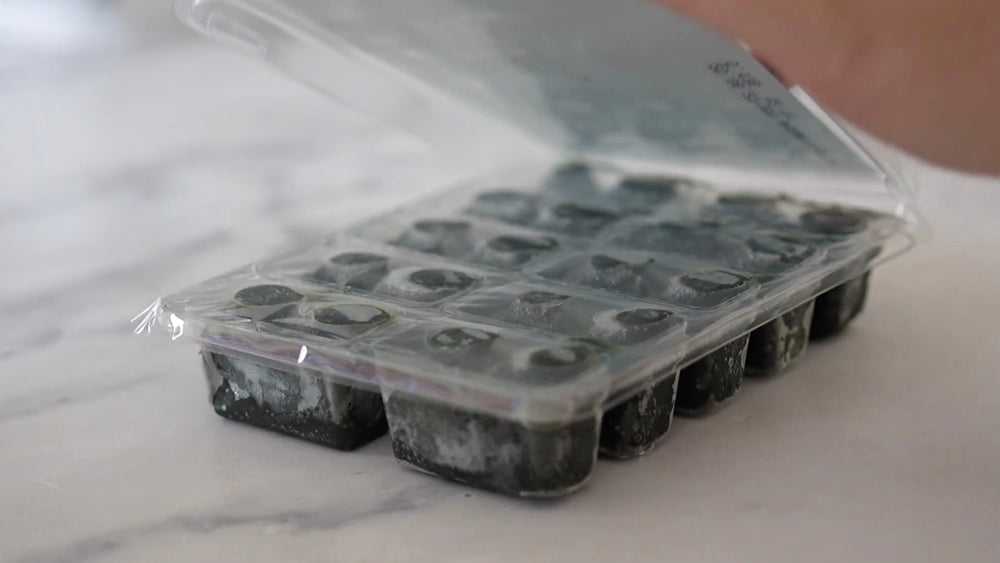
But not all spirulina is worth it. Most of what's sold is dried powder that loses up to half its phycocyanin in processing. Fresh frozen pods keep the nutrients intact.

30,000+
References
Spirulina research indexed across journals, reviews, and clinical trials on Google Scholar.
60%
Complete protein
All nine essential amino acids, by dry weight.
4 hr
Harvest to freeze
The window we keep to lock in nutrients before oxidation.

What isSpirulinareally?

Spirulina is a microscopic spiral-shaped algae that's fed humans, flamingos, and astronauts for centuries. NASA has researched it as food for astronauts on long-duration missions. The FAO has evaluated it as a sustainable nutrient-dense food.

It's rich in complete protein, B-vitamins, copper, manganese, magnesium, potassium, and the pigment-antioxidants chlorophyll and phycocyanin. The catch: most of those nutrients oxidize the moment it's harvested, unless it's frozen, fast.

Iron supportImmune supportGut healthMetabolismWeight managementMuscle recoveryAnti-inflammationEnergy
The eight

Reasons fresh
spirulina is worth it.

Each reason ties to peer-reviewed research. Citations under each card.

01Backed by science
Reason one

Backed by decades
of research.

Spirulina is one of the most extensively studied algae in modern science. Decades of peer-reviewed research describe its effects on inflammation, recovery, energy, and immune function.

NASA has researched it as food for astronauts on long-duration missions. The FAO has evaluated it as a sustainable nutrient-dense food. The benefits are real even if you plan to stay on Earth.

60+
Years of peer-reviewed research
1976
First indexed on PubMed
Source: Karkos et al., Evidence-Based Complementary and Alternative Medicine (2011); Habib et al., FAO Fisheries Circular No. 1034 (2008); NASA Technical Reports, NTRS.

02Athlete approved
Reason two

Pro athletes
rely on it.

Endurance athletes use fresh spirulina for its protein and iron content. In a 2010 randomized trial, daily spirulina extended time-to-exhaustion at 95% VO₂max and reduced exercise-induced oxidative stress.

Fresh frozen keeps the cell wall intact, which is part of why athletes feel a recovery difference without the GI side effects most people get from iron pills.

Time-to-exhaustion at 95% VO₂max
Exercise-induced oxidative stress
Source: Kalafati et al., Med Sci Sports Exerc (2010); Lu et al., Eur J Appl Physiol (2006).
03Seasonal support
Reason three

It supports your allergy response.

Spirulina is rich in chlorophyll and phycocyanin, the pigments that give it its deep green color. Both have well-studied anti-inflammatory effects.

A 2008 double-blind clinical trial in 150 adults found daily spirulina supports a healthy immune response to seasonal allergies, with measurable improvements over six months versus placebo.

6 months
Trial duration
150
Adults in double-blind RCT
Source: Cingi et al., European Archives of Oto-Rhino-Laryngology (2008); Mao et al., Journal of Medicinal Food (2005).
04Iron source
Reason four

A great source
of iron.

Iron deficiency is one of the most common nutrient gaps in America, especially in women of reproductive age and athletes. Spirulina is a more bioavailable plant source of iron than spinach, and clinical trials show it supports healthy iron levels.

Fresh frozen pods deliver iron in a form your body can actually use, without the constipation or nausea common with iron sulfate pills.

Hemoglobin in 12-week RCT
Bioavailability vs. grain-based iron
Source: Selmi et al., Cellular & Molecular Immunology (2011); Puyfoulhoux et al., J Agric Food Chem (2001); Kapoor & Mehta, Indian J Exp Biol (1992).
05Healthy weight
Reason five

It supports
healthy weight.

Fresh spirulina is low in calories and nutrient-dense, which helps you feel fuller for longer. Phycocyanin appears to support healthy fat metabolism.

Meta-analyses of clinical trials in overweight adults show small but consistent reductions in body weight and waist circumference with daily spirulina, alongside diet and exercise. It's not a magic bullet. It's a real food that fills nutrient gaps that drive cravings.

~1 kg
Avg reduction over 8-12 wks
Waist circumference
Source: Moradi et al., Complementary Therapies in Medicine (2019) meta-analysis; Mohiti et al., Phytotherapy Research (2020) meta-analysis.
06Antioxidant support
Reason six

It feeds your
defenses.

Spirulina has powerful antioxidants and anti-inflammatory properties. A meta-analysis of nine human trials found it raises total antioxidant capacity and supports immune function in adults.

It supports your body's recovery from training, illness, and everyday stress. The fresher the algae, the more of the active compounds make it through to your body.

Total antioxidant capacity
NK cell activity
Source: Naeini et al., Int J Clin Pract (2021) meta-analysis; Hirahashi et al., Int Immunopharmacology (2002); Park et al., Ann Nutr Metab (2008).
07Eaten for centuries
Reason seven

Eaten for
centuries.

Spirulina naturally occurs in Mexico and around Lake Chad in Africa. Local communities in both regions have eaten this nutritious algae for centuries.

Aztec messengers carried it on long runs between the capital and outposts. The Kanembu people of Chad still harvest it from Lake Kossorom and sell it in local markets as "dihé," roughly 40 tonnes a year.

1568
First documented by Spanish chroniclers
~40 t/yr
Modern Lake Chad harvest
Source: Díaz del Castillo, Historia Verdadera de la Conquista de la Nueva España (c.1568); Farrar, Nature (1966); Abdulqader et al., Journal of Applied Phycology (2000).
08Nutritional powerhouse
Reason eight

A nutritional
powerhouse.

Spirulina is packed with micronutrients: complete protein, iron, potassium, phytonutrients, antioxidants, and a long list of vitamins.

Many of our subscribers feel a noticeable lift in energy within the first two weeks. It's food, not caffeine. Your body responds on its own schedule.

9
Essential amino acids, all complete
80+
Micronutrients per pod
Source: Ciferri, Microbiological Reviews (1983); Habib et al., FAO Fisheries Circular No. 1034 (2008).
I used to use powdered spirulina in my smoothies and it always smelled very much like fish. These frozen pods do not smell and they definitely make my stomach happier than the powder ever did.
Stepheny K.Subscriber, 14 months

What's actually inside a pod.

One 14g pod, frozen within hours of harvest. Whole-cell, lab-tested, no fillers, no anti-caking agents, no maltodextrin. Just the algae.

2g
Complete protein
All nine essential amino acids, gram for gram more than beef.
2.7mg
Bioavailable iron
More bioavailable than iron from spinach.
80+
Micronutrients
B-vitamins, magnesium, potassium, copper, manganese.
150mg
Phycocyanin
The pigment-antioxidant lost up to ~50% in drying.
CHOOSE fresh CHOOSE fresh CHOOSE fresh CHOOSE fresh CHOOSE fresh CHOOSE fresh CHOOSE fresh CHOOSE fresh CHOOSE fresh CHOOSE fresh CHOOSE fresh CHOOSE fresh

Eight reasons.
One box.

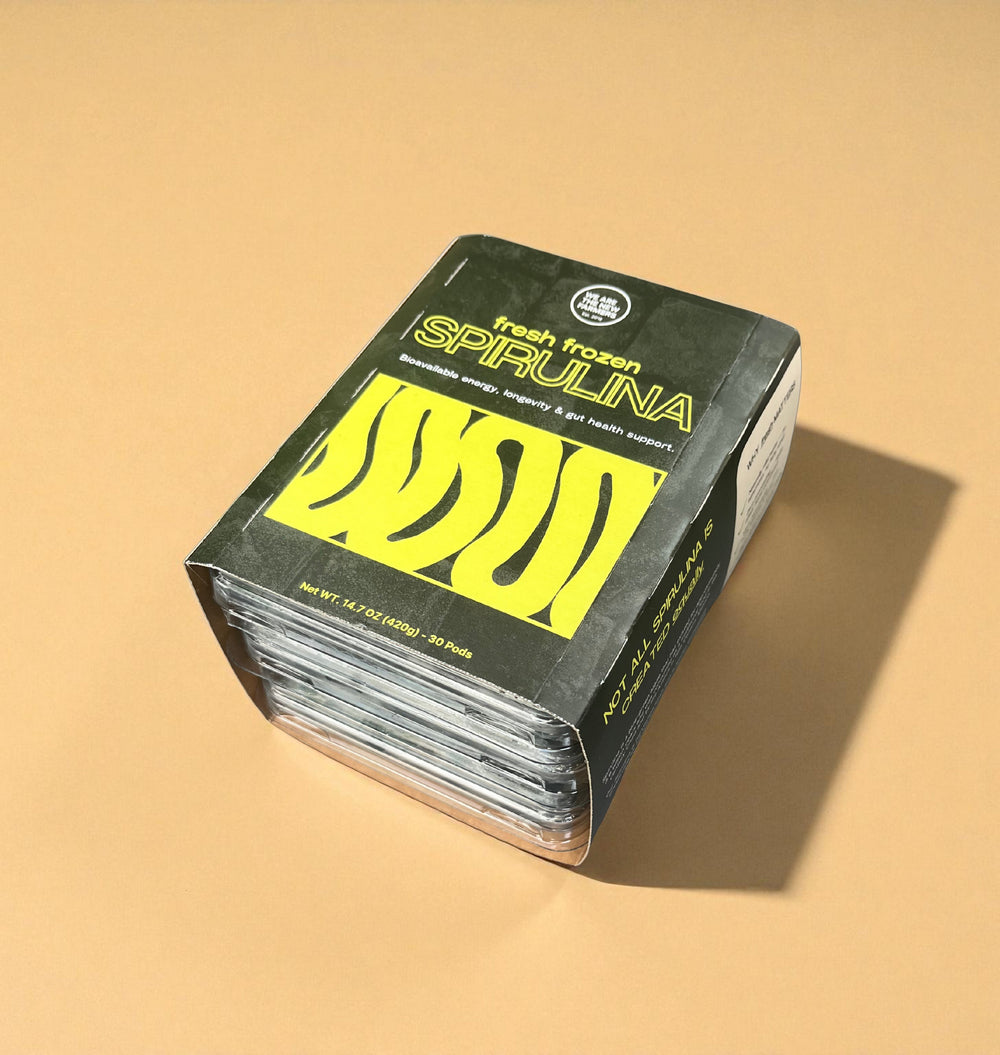
30 fresh-frozen pods. One a day. Drop one in your smoothie or water and feel the difference within two weeks, or full refund.

30-day money-back guarantee · Ships frozen, overnight
FRESH FROZEN SPIRULINA PODS

Common questions

Everything else about how, why, and how much.
How much spirulina should I take a day?

One pod (14g) per day is enough for most people. Some athletes double up on heavy training days. There's no known toxicity at higher doses, but more isn't necessarily better.

Is fresh spirulina safe during pregnancy?

Our spirulina is lab-tested for heavy metals and microcystins, the main safety concerns with poorly grown spirulina. Pregnant or nursing? Check with your physician first, standard advice for any food or supplement.

Why is fresh better than dried powder?

Drying spirulina at typical commercial temperatures destroys up to ~50% of its phycocyanin and degrades delicate vitamins (Sarada 1999). Fresh frozen preserves the whole-cell structure and the full spectrum of nutrients. Same algae, more usable nutrition per gram.

What does it taste like?

Almost nothing. Slightly grassy, mineral. Most subscribers can't taste it once it's blended into a smoothie. Dried powder, on the other hand, tastes assertively of pond.

How fast will I feel a difference?

Most subscribers tell us they notice a shift in energy and digestion within two weeks.